
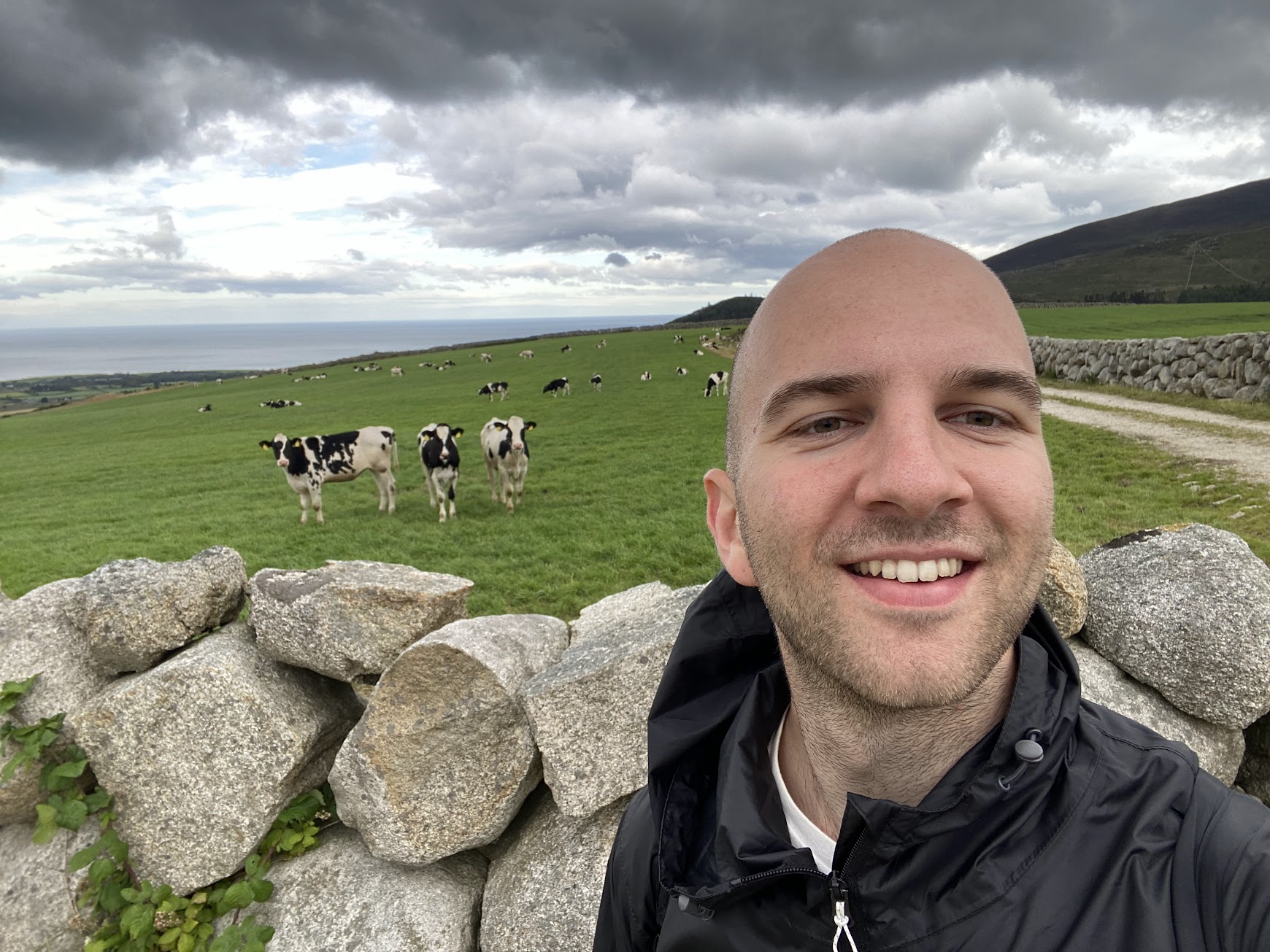
Ireland might just be one of Europe’s most fascinating destinations. Sitting on the edge of the Atlantic, it has it all; dramatic coastlines, rolling green hills, and villages that feel like they’ve been lifted straight out of a storybook.
Sharing the island with Northern Ireland and just a short hop from Britain, Ireland has a history as wild as its landscapes. Once under centuries of British rule, it finally won independence in the early 20th century—though echoes of that past are still felt today.
But there’s so much more to Ireland than its history. From its deep Celtic roots and ancient myths of giants and fairies, to the Irish language that has survived against all odds, this country is packed with surprises at every turn.
Almost everyone has heard of Dublin, but far fewer venture beyond it. That’s exactly what makes travelling around Ireland so rewarding. Whether it’s exploring castles, hiking through misty national parks, or simply having a pint and a chat with locals in a pub, Ireland has a way of pulling you in.
After travelling through places like Galway, Cork, and the heart of the Midlands, I’ve gathered some incredible facts about Ireland to share with you—and I truly believe this island is one of the most unique places to explore in Europe.
Honestly, visit now and see it for yourself! But if you still need convincing, here are 25 fun and surprising facts about Ireland that might just earn it a spot on your bucket list.
Quick snapshot 🇮🇪
- Currency: Euro (€)
- Driving: Left-hand side
- Patron Saint: St. Patrick (celebrated March 17)
- Capital City: Dublin
- Population: ~5.3 million (Republic of Ireland)
- Languages: English & Irish (Gaeilge)
1. Sean’s Bar is (arguably) the oldest pub still running 🍺
Athlone’s Sean’s Bar claims continuous operation since AD 900, a claim supported by archaeological finds like wattle-and-daub walls discovered on-site. Records of taverns this old are rare, so historians usually phrase it as one of the world’s oldest licensed pubs—either way, you can still grab a pint inside its low-ceilinged, fire-lit rooms today.
2. Ireland has no native snakes 🐍
The “St. Patrick banished them” story is folklore. The real reason is biogeography: after the last Ice Age, rising seas cut Ireland off from mainland Europe before snakes could recolonize. You might spot slow worms in some places, but they’re legless lizards, not snakes.
3. One island, two jurisdictions
The island contains the Republic of Ireland (an independent state, euro currency) and Northern Ireland (part of the UK, pound sterling). Modern travel is seamless thanks to the Common Travel Area and an open land border—an important detail of the Good Friday Agreement (1998) that helped end decades of conflict.
4. Halloween began here 🎃
The festival of Samhain marked the end of harvest and the start of the darker half of the year. Many traditions—costumes, lanterns, and the idea of a thinner veil between worlds—were later blended with Christian practices and exported, eventually becoming global Halloween.
5. Guinness: more than a pint of stout
Brewed at St. James’s Gate since 1759, Guinness pioneered long-term export using wooden casks and later nitrogenation for its signature creamy head. The brand’s yeast strain is guarded closely, and the Guinness Storehouse is now one of the country’s most visited attractions.
6. Irish (Gaeilge) lives on—especially in Gaeltacht regions
Irish is the first official language alongside English. While everyday use nationwide is limited, census figures show hundreds of thousands with some ability and daily community use in Gaeltacht areas (like parts of Donegal, Galway, and Kerry). Road signs, school curricula, and media help maintain and revive the language.
7. Inis Oírr: A Living Gaeltacht & a Famous Shipwreck
The smallest of the Aran Islands, Inis Oírr is not just about stunning Atlantic scenery — it’s also one of the few remaining Gaeltacht regions, where people still speak Irish (Gaeilge) as their daily language. Walking through its narrow lanes feels like stepping into a living piece of Ireland’s cultural heritage. But Inis Oírr is also famous for the MV Plassey, a cargo ship wrecked on the rocks in 1960. Locals heroically rescued the crew, and the wreck remains stranded on the shore to this day — now a haunting but iconic landmark, even featured in the opening credits of the TV show Father Ted.
8. A landscape of castles 🏰
There are thought to be 30,000+ castles or castle sites across the island—tower houses, Norman keeps, and Anglo-Irish estates. Many were built between the 12th and 16th centuries for defense and local power; some, like Blarney, Kilkenny, and Trim, are beautifully preserved.
9. So green, because… rain ☔
Ireland’s mild, oceanic climate brings frequent showers—especially on the west coast where Atlantic systems hit first. The payoff is lush pasture that supports world-class dairy and a patchwork of emerald fields that gave the island its nickname: The Emerald Isle.
10. The Cliffs of Moher are a geological epic 🌊
Rising up to 214 m (702 ft), the cliffs showcase layers of shale and sandstone laid down in ancient river deltas. On clear days you can spot the Aran Islands and Galway Bay; on stormy days, watching Atlantic swells hammer the base is unforgettable.
11. The harp is the state symbol 🎵
Ireland is one of the few countries with a musical instrument as its emblem. The design seen on official state seals (and coins) faces opposite the harp used by Guinness—so you can actually tell them apart.
12. Newgrange predates the pyramids
Newgrange (County Meath) is a Neolithic passage tomb built around 3200 BC. Its roof box aligns with the winter solstice sunrise, illuminating the burial chamber—proof of sophisticated astronomy and engineering long before the pyramids of Egypt.
13. Leprechauns have deep folklore roots 🍀
Far from cartoon mascots, leprechauns come from a wider tapestry of Aos Sí (fairy folk) in Irish mythology. The pot of gold and cobbler stories evolved later, but the idea of clever, elusive spirits reflects older beliefs about landscape and luck.
14. The Book of Kells is a masterpiece 📖
Created by monks around AD 800, this illuminated Gospel dazzles with intricate knotwork, pigments, and iconography. It’s preserved at Trinity College Dublin, where rotating pages are displayed to protect the vellum from light damage.
15. Music is a living language 🎶
From session tunes in rural pubs to global headliners like U2, The Cranberries, Hozier, and Enya, music is woven into community life. Instruments such as the uilleann pipes, fiddle, and bodhrán define the traditional sound.
16. Drive the Wild Atlantic Way 🌊
At roughly 2,500 km, this signed coastal route runs from Donegal to West Cork. Expect sea stacks, surf beaches, and fishing villages—and microclimates that change every half hour. It’s one of Europe’s great road trips.
17. From boom to bust—and back again
The island’s population exceeded 8 million before the Great Famine (1845–52) led to mass death and emigration. Today, a large Irish diaspora shapes cultures in the US, UK, Canada, Australia, and beyond—one reason St. Patrick’s Day is global.
18. Home-grown sports with huge crowds
The GAA governs Gaelic football and hurling, amateur sports with professional-level passion. Every county fields teams, and the All-Ireland Finals in Dublin’s Croke Park draw crowds of 80,000+.
19. St. Patrick’s Day: a worldwide celebration 🍀
What began as a religious feast day is now a global festival of parades and green lights on landmarks. In Ireland, it’s also a long weekend of music, sport, and family events—less green beer, more community.
20. The Shamrock: Ireland’s Symbol 🍀
The shamrock is one of the most iconic symbols of Ireland. Legend says St. Patrick used its three leaves to explain the Holy Trinity when teaching Christianity in the 5th century. Long before that, Celtic traditions also saw clovers as plants of luck and protection. Today the shamrock is everywhere — on coins, sports jerseys, and even official government logos. And every St. Patrick’s Day, millions wear it proudly as a badge of Irish identity.
21. The Ring of Kerry packs in the scenery 🏞️
This 179-km loop in County Kerry folds together mountains, lakes, ancient stone forts, and Atlantic vistas. Driving anti-clockwise helps with tour-bus traffic; hiking sections like the Kerry Way get you closer to the landscape.
22. A young, educated workforce
Ireland has one of the youngest populations in the EU and a high tertiary-education rate. Combined with EU market access and English as a main language, that’s why many tech and pharma multinationals base European operations here.
23. Irish dancing goes far beyond Riverdance 💃
The global hit revived interest, but traditional sean-nós (old-style) dancing is looser and more improvisational. Competitive step dancing uses the iconic hard shoes; community céilís focus on group patterns and fun.
24. Literature runs deep
Four Irish writers—W.B. Yeats, George Bernard Shaw, Samuel Beckett, Seamus Heaney—won the Nobel Prize. Add James Joyce and Edna O’Brien, and you’ve got a literary lineage that shaped modern storytelling.
25. The welcome is real
The Irish concept of “craic” blends humour, warmth, and good company. Whether it’s directions on a rainy lane or a stranger topping up your tea, everyday kindness is a big reason visitors return.
Conclusion
Ireland is much more than shamrocks and Guinness. From its ancient history to its modern culture, this island is packed with surprises.
Whether you’re drawn by the castles, the music, or just the friendly atmosphere, Ireland will leave you wanting to return again and again.